



Contact Us
Low-voltage wiring powers the technology that makes modern homes smart, secure, and connected. From security cameras and doorbells to home networks and audio systems, these systems require proper wiring for reliable performance. BIG Family Electrical Services & EV Charger Installation installs low-voltage wiring throughout Baton Rouge homes, including areas like Mid City, providing the infrastructure your smart home needs.
Low-voltage systems use less than 50 volts, typically 12 to 24 volts. While not immediately dangerous like standard household current, proper installation matters for performance and longevity. We handle low-voltage wiring that works reliably for years, whether in newer builds or established areas like Capital Heights.
our services:
- Carbon Monoxide Detector Installation
- Circuit Breaker Installation
- Commercial Electrician & Electrical Services
- Electrical Outlet Installation
- Electrical Panel Upgrade & Replacement
- Electrical Repair
- Electrical Rewiring
- Electrical Safety Inspection
- Electrical Service Upgrade
- Electrician
- Emergency Electrician
- EV Charger Installation
- GFCI Outlet Installation
- Home Automation Audio & Video Installation
- Home Automation Installation
- Low Voltage Wiring
- Residential Electrician & Electrical Services
- Ring Device Installation & Wiring
- Smoke Detector Installation
- Whole House Generator Installation & Repair
- Whole House Surge Protector
WHAT YOUR NEIGHBORS ARE SAYING ABOUT US
What Low-Voltage Wiring Is Used For
Low-voltage wiring serves numerous systems throughout modern homes. Understanding these applications helps homeowners plan technology infrastructure.
- Security cameras need wiring for power and data transmission. Hardwired cameras provide more reliable connections than WiFi systems. Power over Ethernet cables supply both electricity and data through a single cable run.
- Video doorbells require low-voltage wiring for power and communication with indoor chimes. While some models use batteries, hardwired versions work more reliably and eliminate battery replacement.
- Network infrastructure uses Cat5e, Cat6, or Cat7 Ethernet cables connecting devices to routers and switches. Hardwired network connections deliver faster, more stable internet than WiFi for computers, gaming systems, and streaming devices.
- Home automation systems rely on low-voltage wiring connecting sensors, controllers, and devices. Smart lighting, thermostats, and security systems communicate through these networks.
- Audio systems use low-voltage speaker wire connecting receivers to speakers throughout homes. Whole-house audio systems require proper wire runs to multiple rooms.
- Telephone systems still use low-voltage wiring in some homes, though many have switched to internet-based phone service.
- Landscape lighting operates on low-voltage systems safer than standard electrical circuits. Transformers step the household voltage down to 12 volts for outdoor lighting.
- Security systems including sensors, keypads, and sirens connect through low-voltage wiring. These systems coordinate through central control panels managing all components.
Baton Rouge’s climate requires proper low-voltage installation techniques. Outdoor wiring needs protection from humidity and rain. Indoor runs through attics face extreme heat during summer, especially in homes around Goodwood, where older layouts often require more careful routing.
Low Voltage Systems We Install
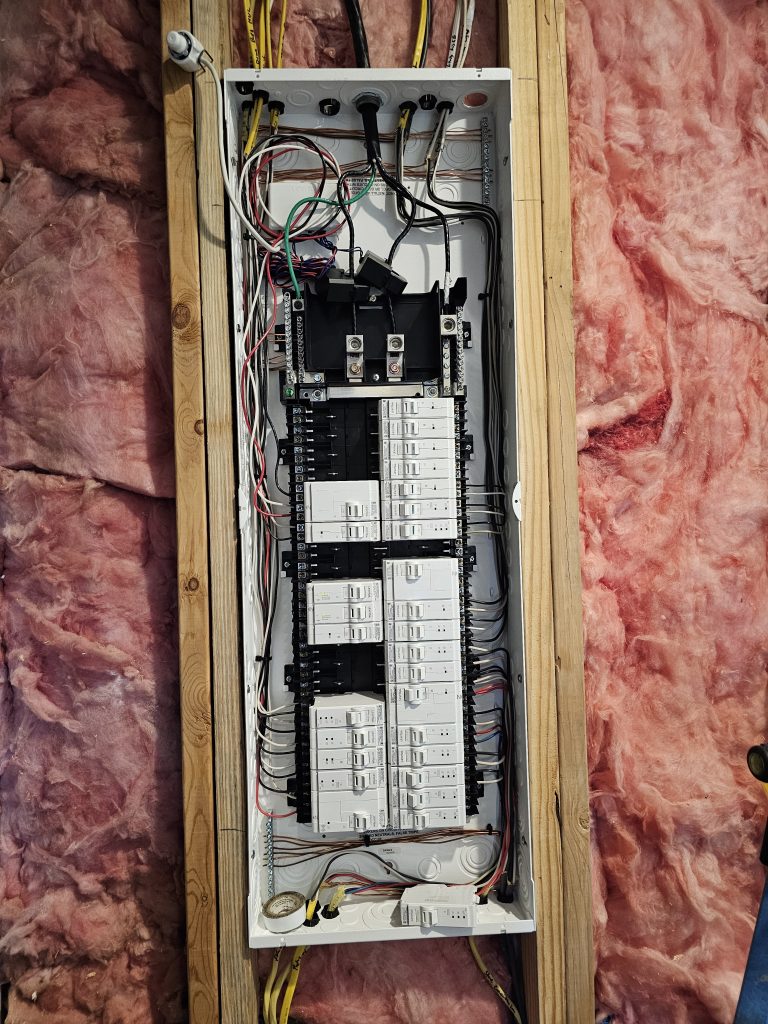
We install complete low-voltage systems for all home technology needs. Our installations provide reliable infrastructure supporting current devices with room for future expansion, including homes in areas like Tara.
Our low-voltage wiring services include:
- Network wiring with Cat5e, Cat6, or Cat7 ethernet cables throughout homes
- Security camera wiring for indoor and outdoor surveillance systems
- Video doorbell wiring with proper power and chime connections
- Home automation wiring connecting smart devices and controllers
- Whole-house audio wiring for multi-room sound systems
- Landscape lighting wiring with proper transformers and buried cables
- Security system wiring including sensors and control panels
- Intercom system wiring connecting rooms and entry points
- Thermostat wiring for smart climate control systems
Network wiring installations create hardwired internet access points throughout homes. We run Ethernet cables from central router locations to offices, entertainment centers, and other areas needing fast, reliable connections. Proper wire runs avoid interference and maintain signal quality.
Security camera installations require planning camera placement, running cables through walls and attics, and connecting to recording systems or cloud services. Outdoor camera runs need weatherproof protection. We use appropriate outdoor-rated cables and proper sealing techniques.
Home automation wiring connects smart devices to central hubs or controllers. These systems may use proprietary wiring or standard ethernet depending on the automation platform. We install wiring compatible with your chosen smart home ecosystem.
Audio system wiring involves running speaker cables from central receivers to speaker locations throughout homes. Proper wire gauge selection based on run length and speaker impedance ensures optimal sound quality. We conceal wire runs behind walls for clean installations.
Landscape lighting installations include transformer mounting, buried cable runs to light fixtures, and proper connections protecting against moisture. Baton Rouge’s humidity requires careful attention to waterproofing all outdoor connections.
Benefits of Professional Low-Voltage Wiring
Professional low-voltage installation provides advantages over DIY approaches. Proper wiring ensures reliable performance and accommodates future technology upgrades.
Professional low-voltage wiring delivers these benefits:
- Reliable connections that don’t degrade over time like wireless alternatives
- Faster network speeds through hardwired Ethernet compared to WiFi
- Clean installations with wires concealed behind walls and in attics
- Proper wire routing, avoiding interference from electrical wiring
- Future-proof infrastructure supporting technology upgrades
- Correct wire types and ratings for each specific application
- Protection from Louisiana humidity through proper sealing and waterproofing
- Organized wire runs labeled for easy troubleshooting and modifications
Hardwired networks provide superior performance to WiFi. Ethernet connections deliver consistent speeds without interference from walls, appliances, or neighboring networks. Gaming, video streaming, and work-from-home applications benefit from wired connections.
Security camera systems work more reliably with proper wiring. WiFi cameras lose connection, experience delays, and drain batteries. Hardwired cameras provide continuous power and stable data connections.
Professional installations conceal wiring behind walls and in attics. We route wires through proper pathways, secure them appropriately, and maintain a clean appearance. DIY wiring often involves visible cables running along baseboards or walls.
Proper wire separation prevents interference. Low-voltage wiring run parallel to electrical wiring can pick up interference, affecting signal quality. We maintain appropriate separation distances and use shielded cables where necessary.
Future technology upgrades benefit from quality initial installations. Running extra cables during construction or renovation costs little but provides flexibility for future needs. We recommend infrastructure exceeding current requirements to accommodate technology advances.
Our Low Voltage Wiring Process
We approach low-voltage installations systematically, ensuring proper infrastructure for current and future needs. Planning and execution quality determine system performance and longevity.
Our installation process includes:
- Consultation to understand your technology needs and goals
- System design planning, wire runs, and equipment locations
- Wire pathway identification through walls, attics, and crawl spaces
- Proper wire type selection for each application
- Professional wire installation with minimal drywall impact
- Termination and testing of all connections
- Equipment mounting and configuration
- System testing, verifying proper operation
- Documentation of wire runs for future reference
Planning begins with understanding how you use technology. We discuss current devices, planned additions, and where you need connectivity. This informs wire run planning and ensures adequate coverage throughout your home.
Wire runs through walls and attics require careful routing. We minimize drywall damage, avoid areas with insulation or obstacles, and maintain appropriate distances from electrical wiring. Professional routing ensures signal quality and simplifies future modifications.
We use proper wire types for each application. Network cables vary in performance levels. Security cameras may need special cables carrying power and data. Audio systems require correctly gauged speaker wire. Using appropriate wire ensures systems perform as designed.
Termination quality affects performance significantly. We install connectors properly, test connections, and verify signal quality. Poor terminations cause intermittent problems frustrating to diagnose and repair.
After installation, we test the entire systems confirming proper operation. Network connections verify appropriate speeds. Security cameras show clear images. Audio systems deliver quality sound throughout coverage areas.
Why Choose BIG Family Electrical Services & EV Charger Installation
BIG Family Electrical has installed low-voltage systems throughout Baton Rouge since 2006. We’re a family-owned company that understands both the electrical and technology aspects of modern home systems. Our founder combines electrician experience with technical knowledge to design and install low-voltage infrastructure that works reliably.
We plan low-voltage installations considering both current needs and future expansion. Technology changes rapidly. Infrastructure installed today should accommodate devices not yet invented. We build flexibility into our installations.
Our team understands Baton Rouge homes and how to work with various construction types. We route wires efficiently through different home styles with minimal impact on your walls and ceilings. Experience with local construction methods helps us complete installations cleanly.
We handle both electrical and low-voltage work. Many systems require both standard electrical circuits and low-voltage wiring. Working with one company for complete installations simplifies coordination and ensures proper integration between systems.
We respect your home during low-voltage installations. Running wires through walls and attics requires accessing various spaces. We protect floors and furnishings, work carefully to minimize drywall damage, and clean up thoroughly when finished.
We document installations providing diagrams showing wire runs and connection points. This documentation helps with future modifications, troubleshooting, or technology upgrades. You understand what infrastructure exists behind your walls.