
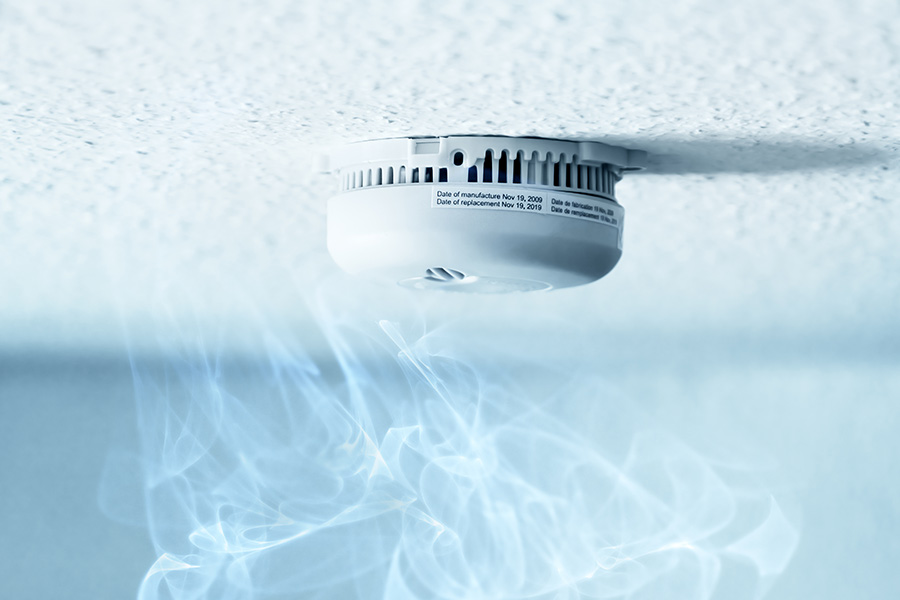
Working smoke detectors cut the risk of dying in a home fire by 60 percent, according to the National Fire Protection Association. For Prairieville homeowners, that means proper detector coverage, correct placement, and consistent maintenance are among the most direct steps a family can take to stay safe.
Smoke detectors are among the most important safety devices in any home, yet they are frequently overlooked, undertested, or improperly placed. Prairieville continues to grow rapidly along the Highway 73 and Airline Highway corridor, and homes here range from brand new construction to older builds, which makes proper smoke detector installation in Prairieville, LA one of the most direct steps a family can take to protect itself. That single NFPA statistic makes the case better than anything else could.
Why Every Prairieville Home Needs Smoke Detectors
Fires move faster than most people expect. In a residential structure, conditions can become unsurvivable within minutes, and the difference between a safe evacuation and a tragedy often comes down to how quickly occupants receive a warning. Smoke detectors provide that warning before flames are visible or the situation becomes unmanageable.
For families in Prairieville, having properly installed and maintained smoke detectors in every required location is not just about meeting code. It is about giving every person in the home the best possible chance to get out safely. Beyond life safety, detectors protect the property itself by enabling earlier intervention from fire services. The investment is minimal. The return is immeasurable.
How Do Smoke Detectors Provide Early Warning in an Emergency?
The core value of a smoke detector is speed. These devices are engineered to detect smoke particles at the earliest possible stage, often well before a fire becomes visible or produces enough heat to be felt in adjacent rooms.
Rapid detection of smoke. Modern smoke detectors use sensors capable of identifying smoke concentrations invisible to the human eye. When smoke enters the detection chamber, the device responds immediately, giving occupants the time they need to evacuate. Overnight, when awareness is lowest and reaction time is slowest, that early warning is the most critical safety advantage a home can have.
Sounding alarms for alerts. The alarm is designed to be impossible to sleep through. The high decibel signal is calibrated to rouse occupants quickly and prompt immediate action. Placement matters here as well. Detectors installed near sleeping areas ensure the alarm reaches occupants while there is still time to evacuate. Prioritizing placement and maintaining working batteries is what turns a smoke detector from a compliance checkbox into a genuinely life-saving device.
Wireless connectivity options. Smart and wireless smoke detectors add capability that standard units cannot match.
- Real-time smartphone notifications alert homeowners even when they are away from the property
- Interconnected systems sound every unit in the home simultaneously once one detector triggers, providing whole-home alerting regardless of where the fire originates
- Smart home integration lets wireless detectors work alongside other connected systems in the house
- Remote monitoring lets you check battery status and device function through an app, removing the risk of a depleted battery going unnoticed
The Role of Smoke Detectors in Reducing Fire-Related Injuries
Early warning does more than save lives. It reduces the severity of injuries by giving occupants time to exit calmly rather than react to an already dangerous situation in a state of panic. Disorientation during a nighttime fire is a leading contributor to injury, and the seconds a smoke detector buys can make a decisive difference in how a family responds.
In Prairieville, newer subdivisions off Airline Highway and along the Highway 73 growth corridor often feature open floor plans that can let fire spread quickly across large interior spaces, which makes detector placement and coverage especially important. Pairing detector coverage with an electrical safety inspection is a natural next step, since electrical faults are a leading cause of residential fires and are often detectable before they become emergencies.
What Type of Smoke Detector Is Right for Your Home?
Not all smoke detectors respond to all fire types with equal effectiveness. Understanding the differences helps homeowners choose the right combination of devices.
- Ionization smoke detectors use a small amount of ionizing material to detect fast-burning, flaming fires and respond quickly to open flames.
- Photoelectric smoke detectors use a light beam to detect the larger particles produced by slow, smoldering fires. They are less prone to nuisance trips from cooking and are particularly effective against fires that begin quietly in walls or furniture.
- Dual-sensor detectors combine both technologies for comprehensive coverage in a single unit.
- Smart smoke detectors connect to home networks and smartphones for remote alerts, status monitoring, and integration with other connected devices. For homeowners who have already invested in home automation systems, smart detectors are a natural and practical addition.
For most homes, a combination of photoelectric and ionization detection, whether in separate units or dual-sensor devices, provides the broadest and most reliable coverage.
How Often Should Smoke Detectors Be Tested and Maintained?
A smoke detector that is not maintained is not a reliable safety device. The maintenance required is minimal, but consistency matters.
Test detectors monthly by pressing the test button. If the alarm does not sound, replace the battery immediately. Replace batteries at least once a year regardless of whether the device appears to be functioning correctly. Many homeowners use a seasonal milestone, such as daylight saving time changes or the start of hurricane season, as a reminder, since Prairieville’s exposure to tropical storms and the extended power outages that can follow makes reliable battery backup especially important.
Clean detectors every six months to remove dust and debris that can interfere with sensor function. A soft cloth or gentle vacuum is sufficient. Replace entire units every ten years, since sensor technology degrades over time and older detectors may not respond reliably to low-level smoke. Keeping a simple log of test dates and battery replacements makes it easy to stay on schedule.
Local Regulations and Recommendations for Smoke Detector Installation
Louisiana residential code and local Prairieville requirements set minimum standards for smoke detector placement that every homeowner should know.
- Detectors must be installed inside every bedroom, outside each sleeping area, and on every level of the home, including basements
- A combination of ionization and photoelectric detection is recommended for the most complete coverage
- Monthly testing is required to confirm functionality
- Units must be replaced every ten years to maintain detection reliability
Meeting these requirements is the starting point. In practice, many homes benefit from additional detectors beyond the minimum, particularly larger properties or homes with multiple wings where a single hallway detector may not provide adequate coverage throughout.
Frequently Asked Questions About Smoke Detectors
How many smoke detectors does a Prairieville home need?
Most homes need at least one detector in every bedroom, one outside each sleeping area, and one on every level including the basement. Larger homes or those with multiple wings often need additional units beyond the code minimum to ensure the alarm is heard throughout the house.
What is the difference between ionization and photoelectric smoke detectors?
Ionization detectors respond faster to flaming, fast-moving fires, while photoelectric detectors are more sensitive to slow, smoldering fires and less prone to cooking related false alarms. Combining both types, or using a dual-sensor unit, gives the most complete protection.
Should smoke detectors and carbon monoxide detectors be combined?
Combination units can simplify maintenance, but placement requirements differ since carbon monoxide is not always concentrated near sleeping areas the way smoke is. A professional assessment can determine whether standalone or combined units make more sense for your floor plan through carbon monoxide detector installation planning.
Why do smoke detectors chirp even with a fresh battery?
A persistent chirp with a new battery often points to a dust buildup, a wiring issue on hardwired units, or a detector nearing the end of its ten year service life. If cleaning the unit does not resolve it, have it evaluated rather than removing the battery, since a disabled detector cannot warn anyone.
Can smoke detectors be interconnected in an older home?
Older homes without hardwired interconnection can still achieve whole-home alerting using wireless interconnected smoke alarms, which communicate with each other without new wiring. This is often the most practical upgrade path for homes built before interconnection was code required.
Keeping Your Prairieville Family Protected
Smoke detectors are not a passive safeguard. They require intentional installation, consistent maintenance, and thoughtful placement to do their job effectively. For Prairieville homeowners who are not certain their current detectors are properly positioned, fully functional, or up to date, a professional assessment is the most reliable way to find out.
At BIG Family Electrical Services, we install and inspect smoke detector systems throughout the Prairieville area and can confirm your home meets both code requirements and practical safety standards. If you are ready to take that step, schedule your smoke detector inspection today. Your family’s safety is worth the conversation.